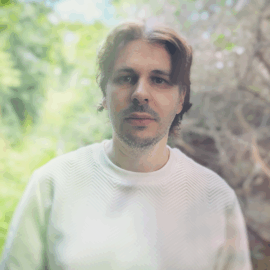
The following is an excerpt from an ongoing conversation with James Clements, known across multiple genres as ASC, currently featured on Headphone Community. We are nearly halfway through his residency, and so far we’ve covered his origins and the Pirate Radio years, the Covert Operations era and the Grey Area work, his composition workflow and ambient as a parallel practice. Some echoes of these discussions are shared below, but, of course, the in-depth interviews, along with a generous giveaway of Bandcamp codes to some of his key albums, are only available to community members, whose support directly fuels the platform and the featured artists. For only one buck per month, you can become part of this journey. Trust me, I wouldn’t invest all my time and energy in it if I didn’t think it was worth it. Enjoy these words.
You were broadcasting on pirate radio before you had any real sense of who was listening. What does playing to an audience you can’t see do to the way you build a set, and did any of that survive into how you sequence an album?
My friend Chris and I were naïve, as you’d expect anyone to be in high school, but it was really the sense of wanting to be involved in the music that we were so excited about at that age. Growing up in the 90’s in England was a special time. There was so much incredible music about, and we were trying our best to get our hands on all of it, which was a near-impossible task when you’re 15 and subsisting on what money we’d get from our parents. Anyway, to get back on track with answering the question, I’m not sure we even thought about that angle back then. It was all about playing the music to our friends at school and whoever else was listening back then. I can’t find any correlation between sequencing an album and building a DJ set, though, personally.
Between 1999 and 2004, you were building what you’ve called collages of samples on a PC, monitored through hi-fi speakers. What did mixing effectively blind teach you that better equipment might have prevented you from learning?
When you’re eager, passionate, and on a shoestring budget, you just find a way. Art always finds a way with any artist who wants it bad enough. I don’t think I actually learnt much back then, other than what it felt like to finish a piece of music from start to finish, and the sense of accomplishment that triggered in me. The mixdowns were terrible, and a lot of the tracks that even saw a release back then were definitely not good enough, but I suppose we’ve all got to start somewhere. The more experience you accumulate over years of passion for the craft, the more you can see the mistakes you’ve made along the way, and what would have been a much better setup here and there, but it honestly didn’t matter when I was starting out. I just wanted to create my own voice among the artists I admired at the time, even if in hindsight, it all seemed to happen a little too quickly for the sake of healthy artistic growth.
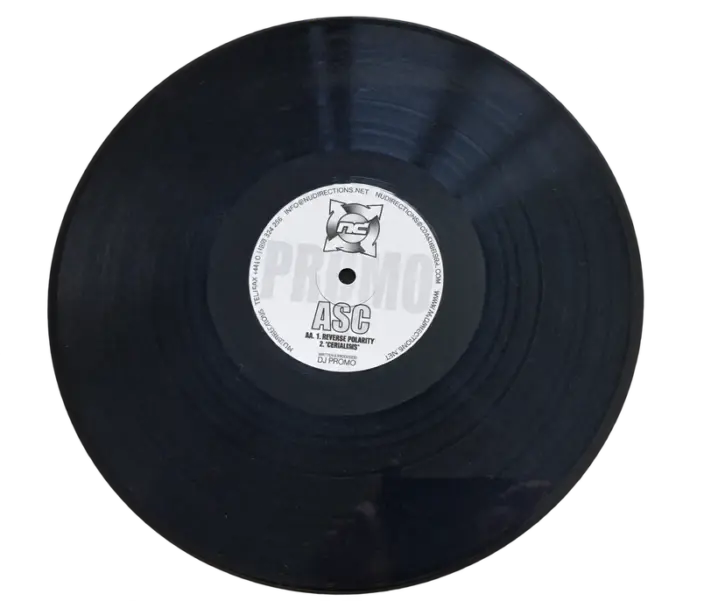
The Nu Directions debut in 1999 put you inside a very defined aesthetic lineage almost immediately. At that age, was that a template you were grateful for or one you were already trying to get out from under?
It was one I was actively trying to get into. I was extremely lucky that I sent out my first CDr of 6 tracks to Nu Directions and all of the tracks got signed. I was extremely happy to be a part of these labels, meet all the guys involved, form friendships – some that have even lasted so far as now – but then it all started to turn a bit sour. Exclusivity deals, labels becoming sub-labels – if you signed said exclusivity deal, even threats of being told a certain label would make it very hard for me to operate if I didn’t sign the deal. Just lots of unnecessary and shady stuff for a sub-genre of music that is kinda microscopic in the grand scheme of things. So I guess this took its toll on me eventually, and I started to branch out, writing different styles of drum & bass, and writing early attempts at techno and ambient.
Half of Covert Operations was run from California before the infrastructure existed to make that easy. What did running a UK label by post actually look like day to day?
This was after I’d lost distribution for the label. We didn’t see a penny back for sales on the first two releases with our initial distributor, so after a fallout, I decided to jump ship when I was offered a Pressing & Distribution (P&D) deal. This was great in theory, since I wouldn’t have to front the money to press the records, which, after getting no money back from the first two, was proving very expensive. This came with its own set of problems, where they’d get creative with the bookkeeping and make it seem like there was still no money. This was when the label was let go. I guess I was asking too many questions, and they thought the juice wasn’t worth the squeeze. So at this point, Luke and I, who ran the infamous Tech Groove site, came up with what we called a subscription service at the time, but it was really just a fancy pre-order system, where we pressed as close to the number of orders we received. It was all good fun for a while, until a lot of other labels started doing the same but, sadly, messed up the process. In some cases, they kept the money and never delivered the vinyl, and I think that put people off the idea of buying direct. This was a long time before Bandcamp became the norm.
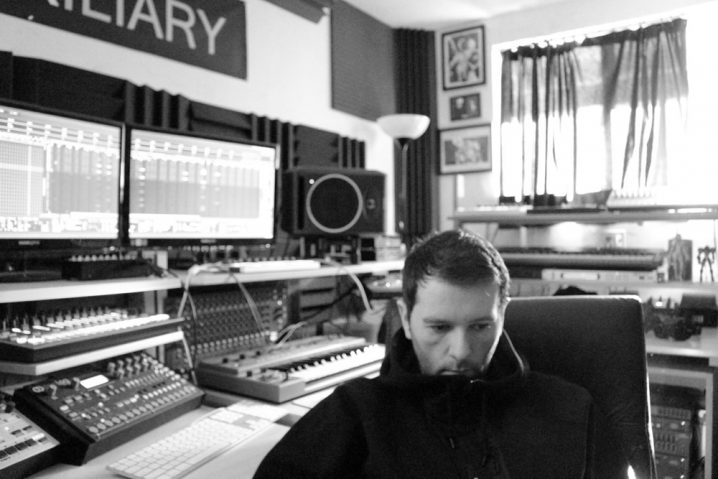
You wound down the label in 2009. Tell us about its final days.
The music was changing, and in my opinion, for the worse. Atmospheric Drum & Bass was largely shaped by what LTJ Bukem and Good Looking Records did, and rightly so, as Bukem was one of the first to pioneer this style and release it. I forget the exact period, but somewhere around the early 2000s, there was a noticeable shift where DJs like Bukem were playing records that were more clearly classified as Liquid Funk, and the whole scene was getting faster and faster year by year. I was getting more disillusioned and disinterested and was about to take a step back from Drum & Bass completely, until Instra:mental got in touch to tell me they were into some tracks of mine they’d heard.
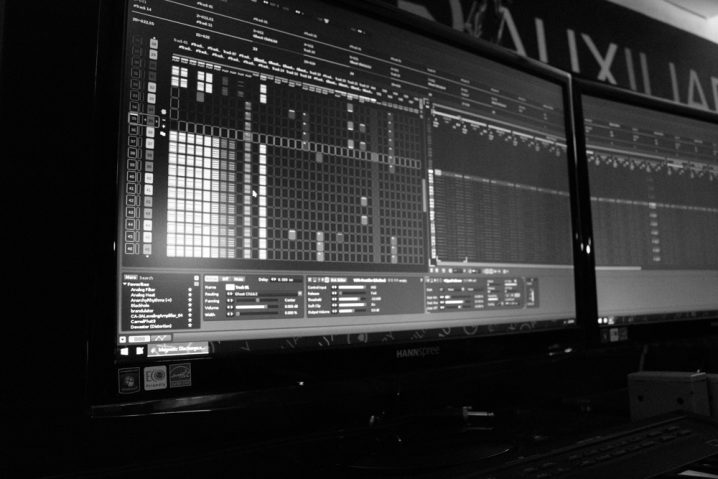
A tracker is a sequencing software that runs time vertically. Music falls down the screen as numbers rather than travelling across it as shapes. After more than twenty years in Renoise, do you think you visualise music differently from producers raised on a horizontal arrangement view or a piano roll?
I’m not really sure, as I started out writing music in trackers on the Atari ST, so it’s always seemed like ‘home’ to me. I tried other programs, such as early versions of Cubase and another timeline sequencer called Trax. These never felt as intuitive to me, especially since I was coming from a purely sample-based workflow at the time. When I switched to PC, the early stuff I released was written in Fast Tracker 2, and then somewhere around the 2000s, I had brief dalliances with Logic, Cubase, and Reason, to name but a few, but after trying a demo of Renoise 1.5 (I think?), I started to feel much more comfortable. By the time I could afford a few synthesizers and outboard gear, it all just slotted in perfectly with how I was writing music in Renoise, and I’ve stuck with it ever since.
You’ve described writing, mixing and EQ happening simultaneously rather than in phases. What does that do to revision? Is there a point on a track past which you can’t go back?
I’ve found committing to something stops me from tweaking elements indefinitely. I’d found myself playing with the same patches on my synths, changing the most minuscule things, thinking I’d somehow made it a million times better. Once I started to trust my gut more in the process, this became how I progressed my ideas and stopped procrastinating far too often.
Some of your tracks lock 128 and 170 together through polyrhythm, so the same record could feel like different genres depending on where you start counting. How does that actually get built, and is the third tempo real or a trick of attention?
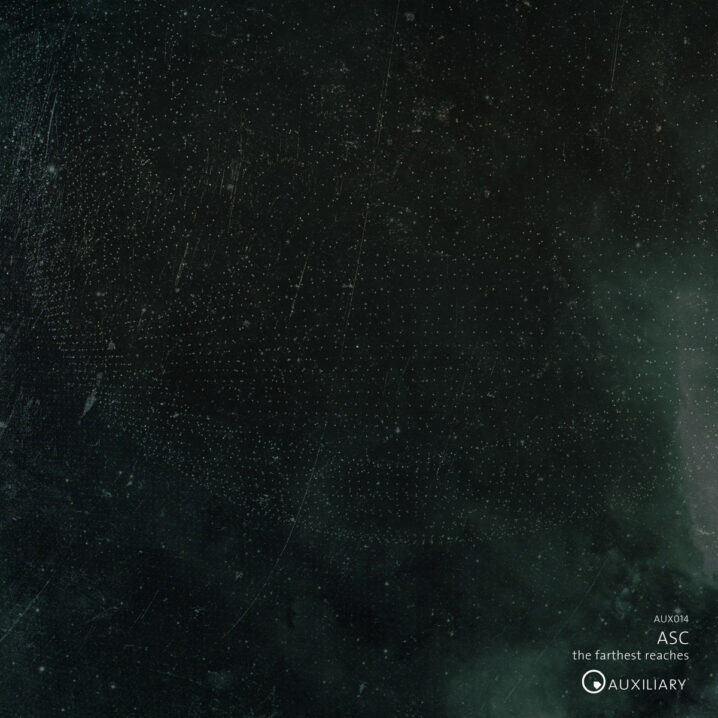
When I wrote the original four tracks that were the cornerstone for this concept, which eventually came out a bit later as The Farthest Reaches, they were all 10+ min pieces that were built to show fluidity between two tempos. These were built specifically to show what was possible within the framework, and how you could go from one tempo to another and then back and forth at ease. It’s based on the mathematical relationship between two specific tempi and their time signatures. There’s no real trick, other than the one your mind plays on yourself when the groove is slowly switching between tempo and before you realise it, you’re no longer listening to a techno track, or vice versa.
“Grey Area” is a term you and Sam KDC put into circulation. Is it a genre, or an admission that genre had stopped being useful to you?
I don’t think we ever meant it as a genre name, per se, but rather as a descriptor for the music sitting in this grey area between techno and 170 bass music. I suppose that might well be the definition of a genre though, so yeah… I dunno. I say 170 rather than drum & bass, because what we were doing with this project doesn’t work with breakbeats and the rigidity of the drum & bass framework. There has to be some swing to the 170 element for it to mix and blend into the techno I was talking about previously. Take tracks like “Solar Reaction”, for example – that’s a good way of explaining what I’m trying to say. It’s still 170, but in my mind, it’s not drum & bass. There is no doubt some people won’t agree, and that’s fine. Music is subjective at the end of the day, so all I can do is explain my thought process and what I think I’m creating.
Auxiliary is still there in the background, which suggests techno is unfinished business rather than a phase you passed through. What’s still out there in it for you?
I’ll never be done with techno, as it’s a form of music I truly love. I’ve found that Spatial has become much bigger than I ever anticipated, so that’s become something that has taken up the majority of my time since its inception. At the time of writing this, I’ve just released a techno EP called Antiquated Thoughts on the ARTS label. There’s another EP signed to ARTS, called Frost Patterns, and that’ll hopefully be out later this year, or early next year. I’ve also been experimenting with rhythmic techno structures at several tempos I’ve never worked with before, for the third release on Presha’s newly minted Saibai imprint. I’ll be doing a follow-up for that at some point. I’m still sitting on a lot of techno also. Stuff that I feel is good enough to release, but I’m also wary of releasing too much music. I release a lot as it is, and Spatial has clouded the waters in that regard, so I don’t want it to be a case of every month there’s a new ASC atmospheric jungle record, a techno one, an ambient one, etc. I feel competing against myself is redundant and makes very little sense.

“Time Heals All” has been remastered and reissued as a four-LP set. Returning to a 2013 record with eleven more years of hearing behind you, did you notice something different? How well did this record age for you?
If anything, I probably heard what I might think of as mistakes, or got a little critical of how I went about achieving something 14-15 years back, since this LP was originally made as 2 albums in 2011. I think one thing I’ve learned, though, is that the listener (and myself) become very familiar and intimate with the tracks, the running order, the artwork, etc., so even though my production techniques and experience may have evolved over that time, it’s for the best not to go back and tinker too much, so I just let the guys at Stardelta do the mastering for vinyl, and it came out sounding amazing. I’ve been working with Lewis and Andy at Stardelta for about 15 years now, so they know my sound inside out, and seem to always get it right on their first attempt.
Your ambient and the rhythmic work have run in parallel for well over a decade rather than alternating. When a sound arrives, what tells you which world it belongs to?
Often, I deliberately set out to create an ambient album from start to finish, so my mind is already in the mode of creating and selecting sounds for a specific palette. There’s definitely been the odd occasion where I’m working on something, then I get the genesis of an idea by hearing something and can switch gears, or set something aside for later use.